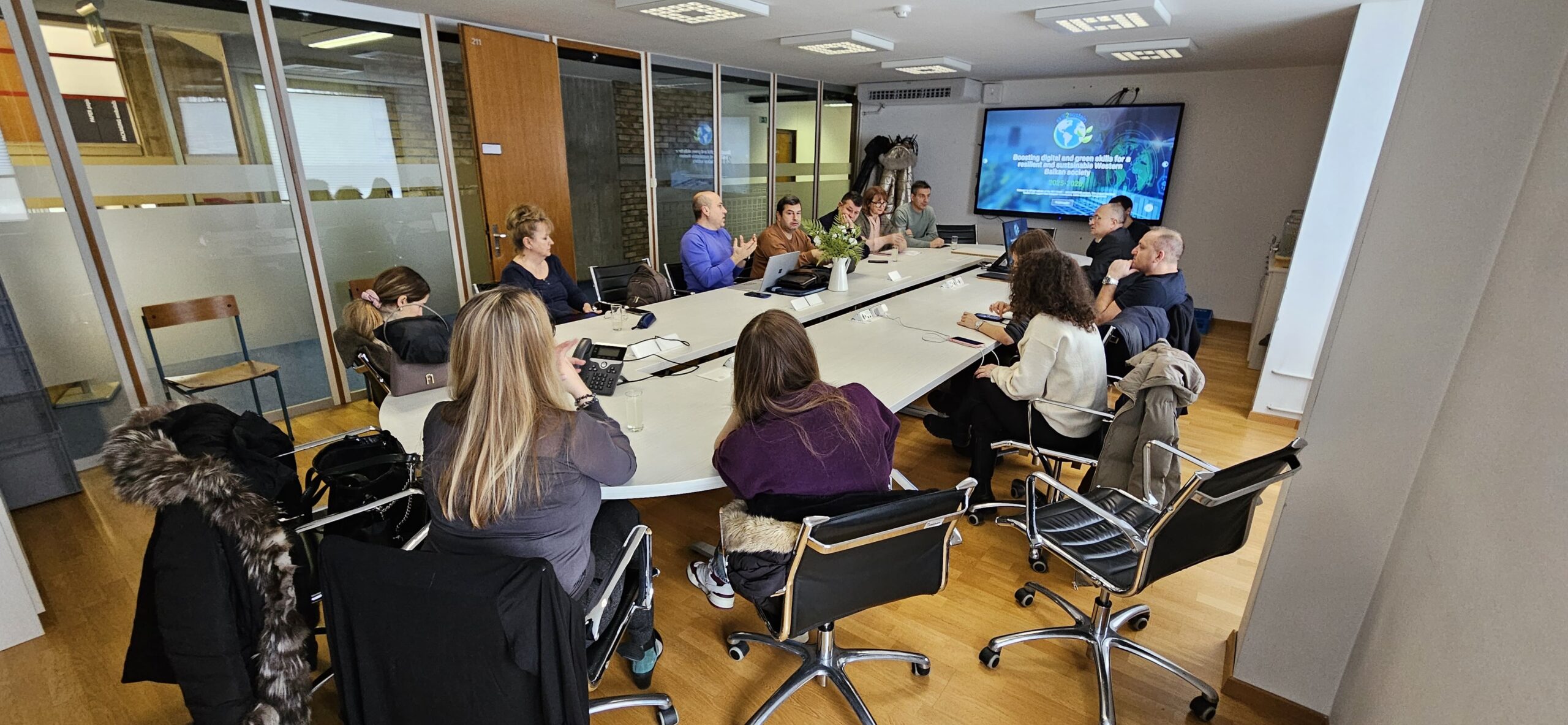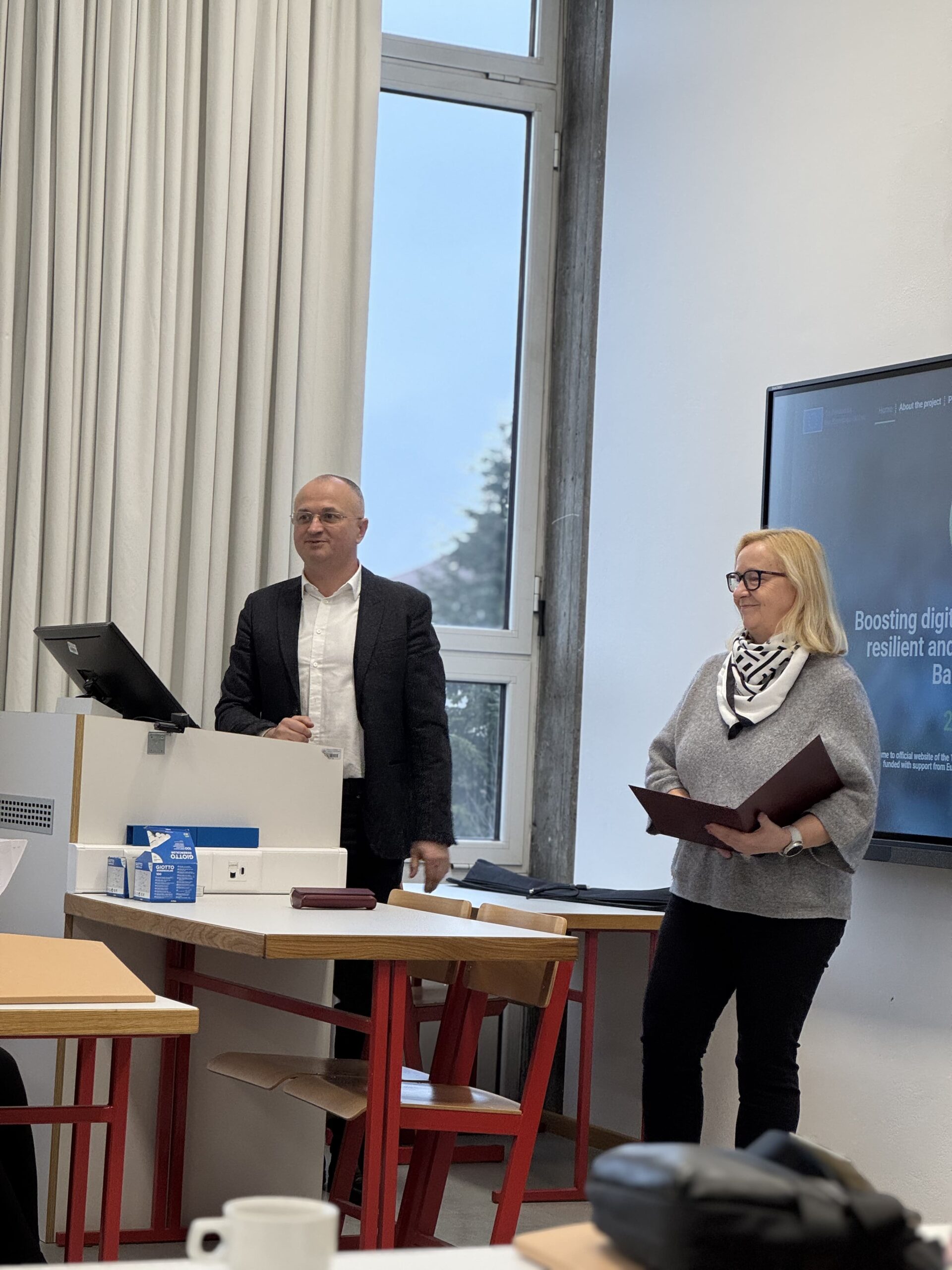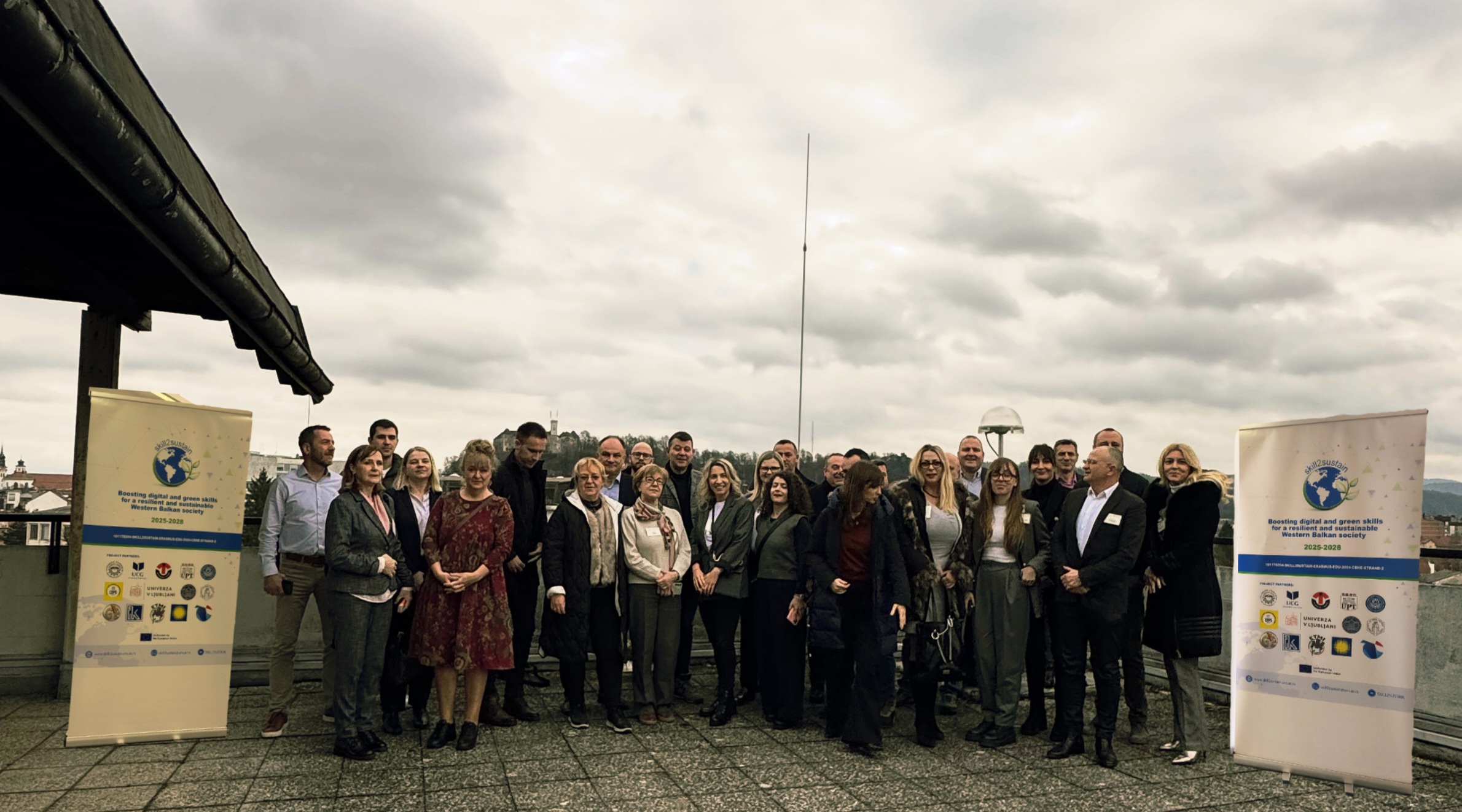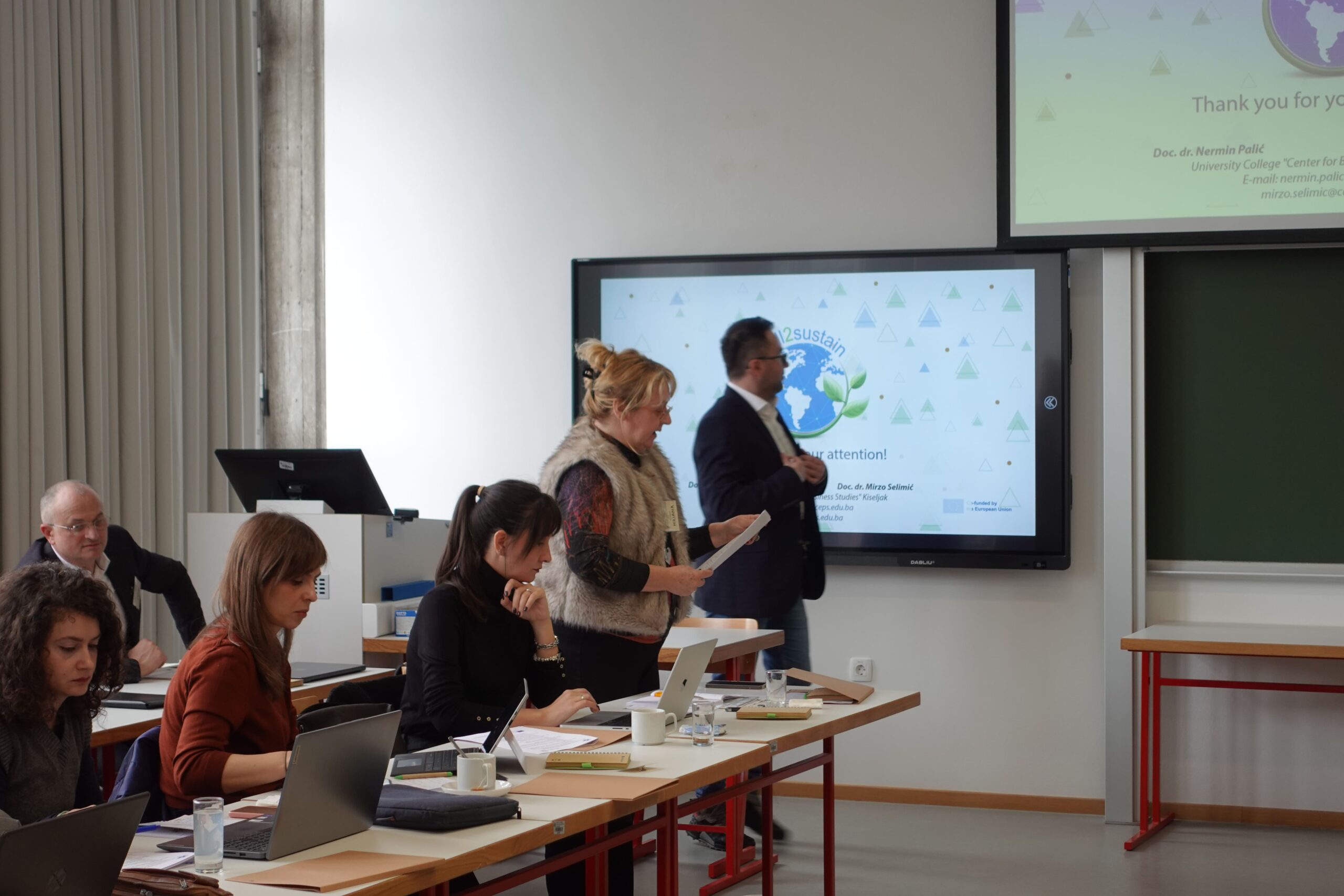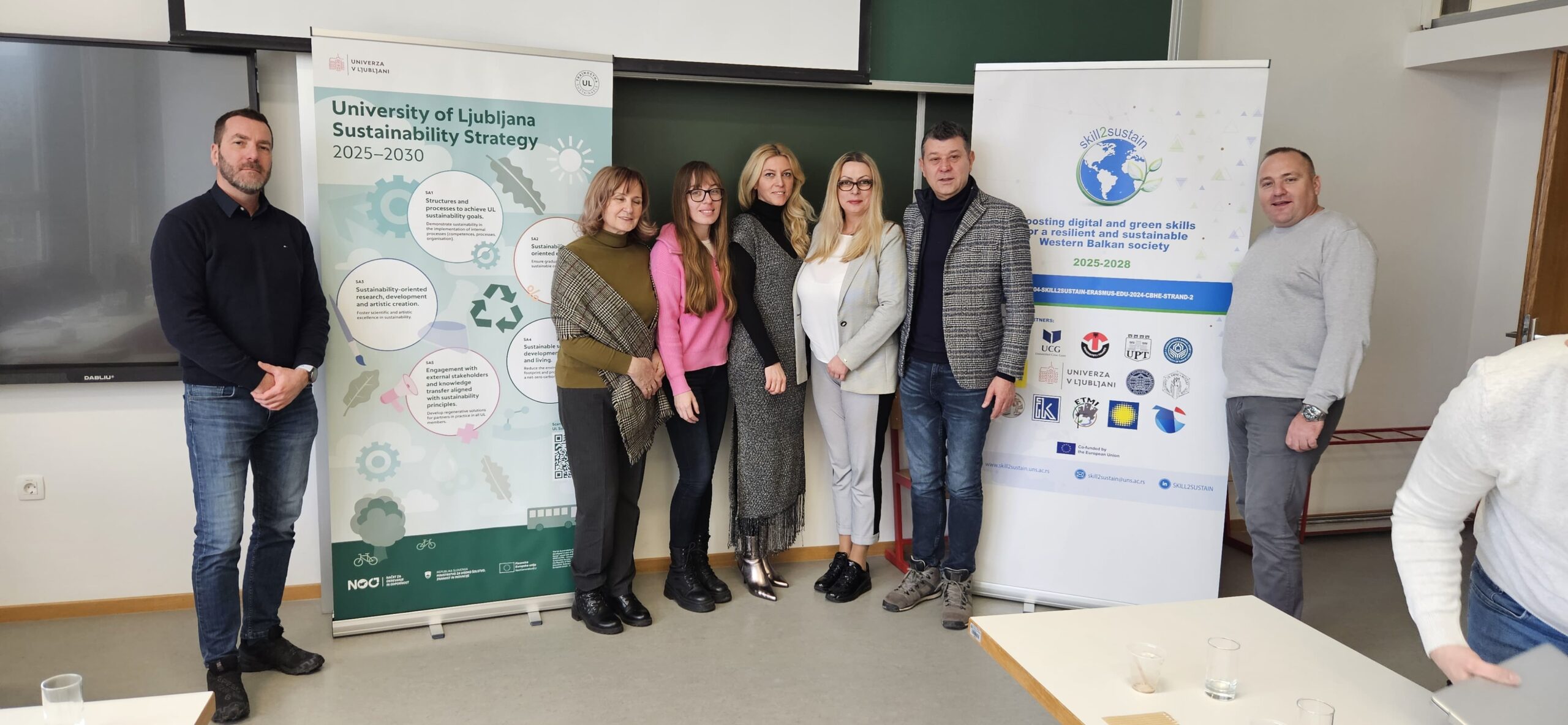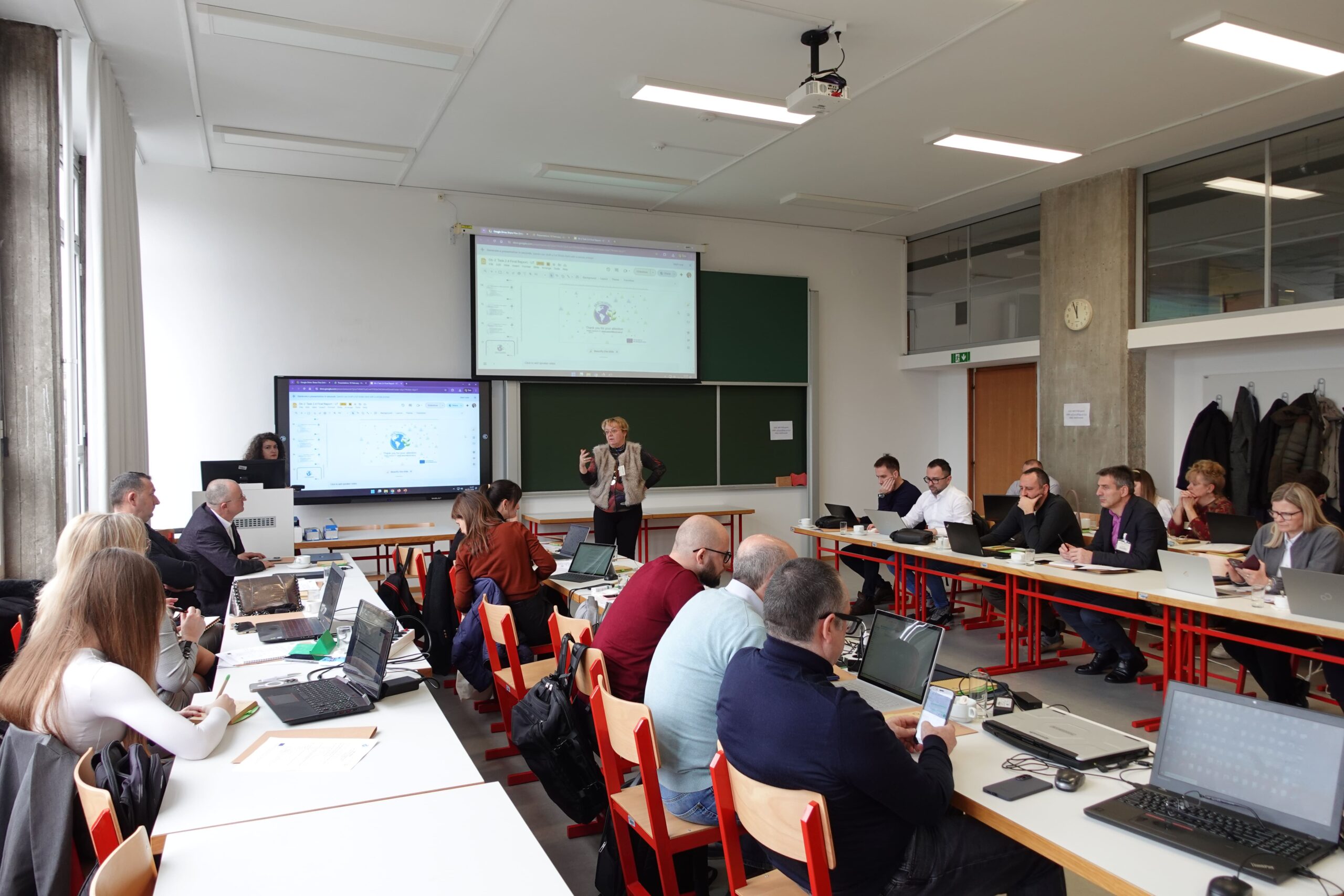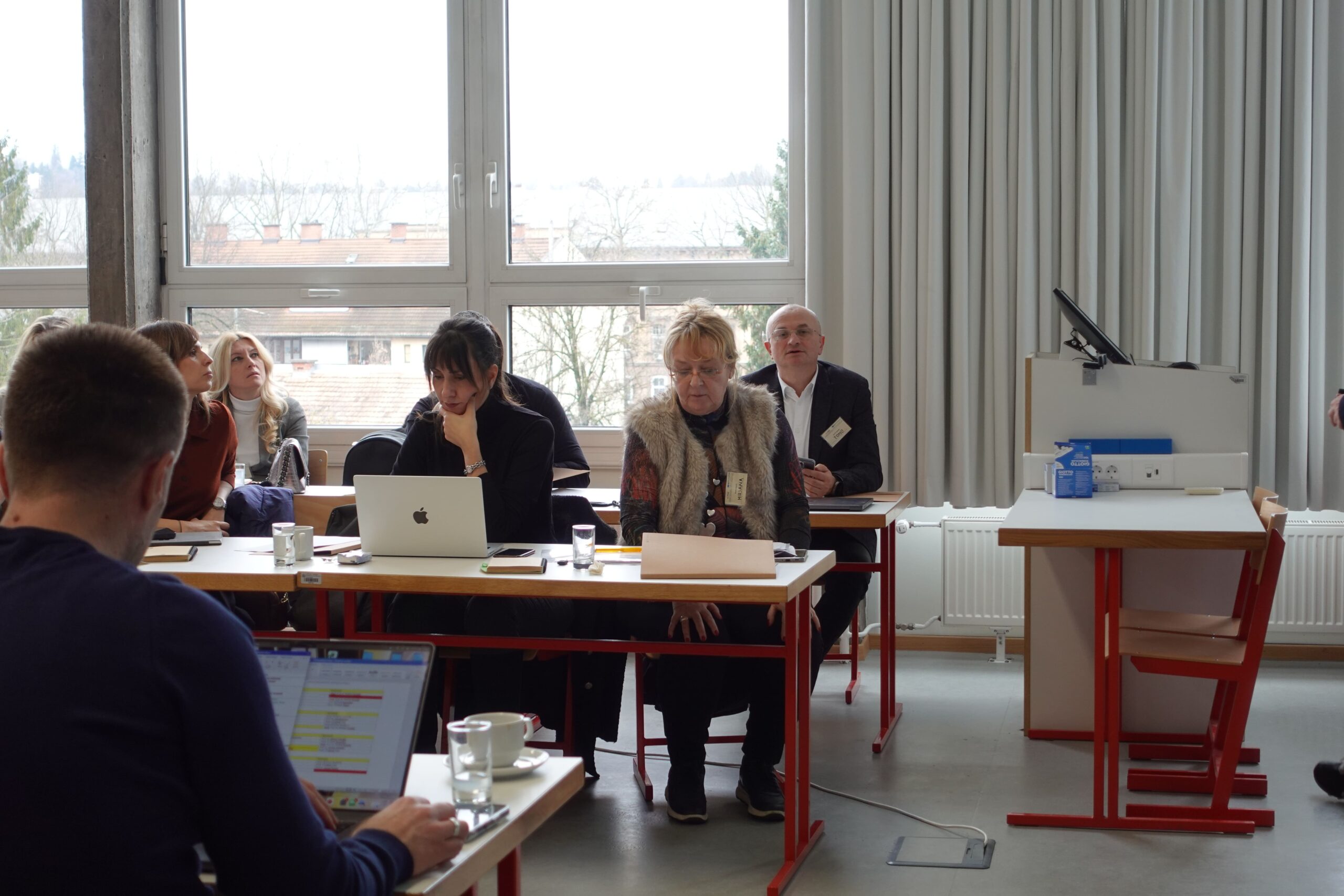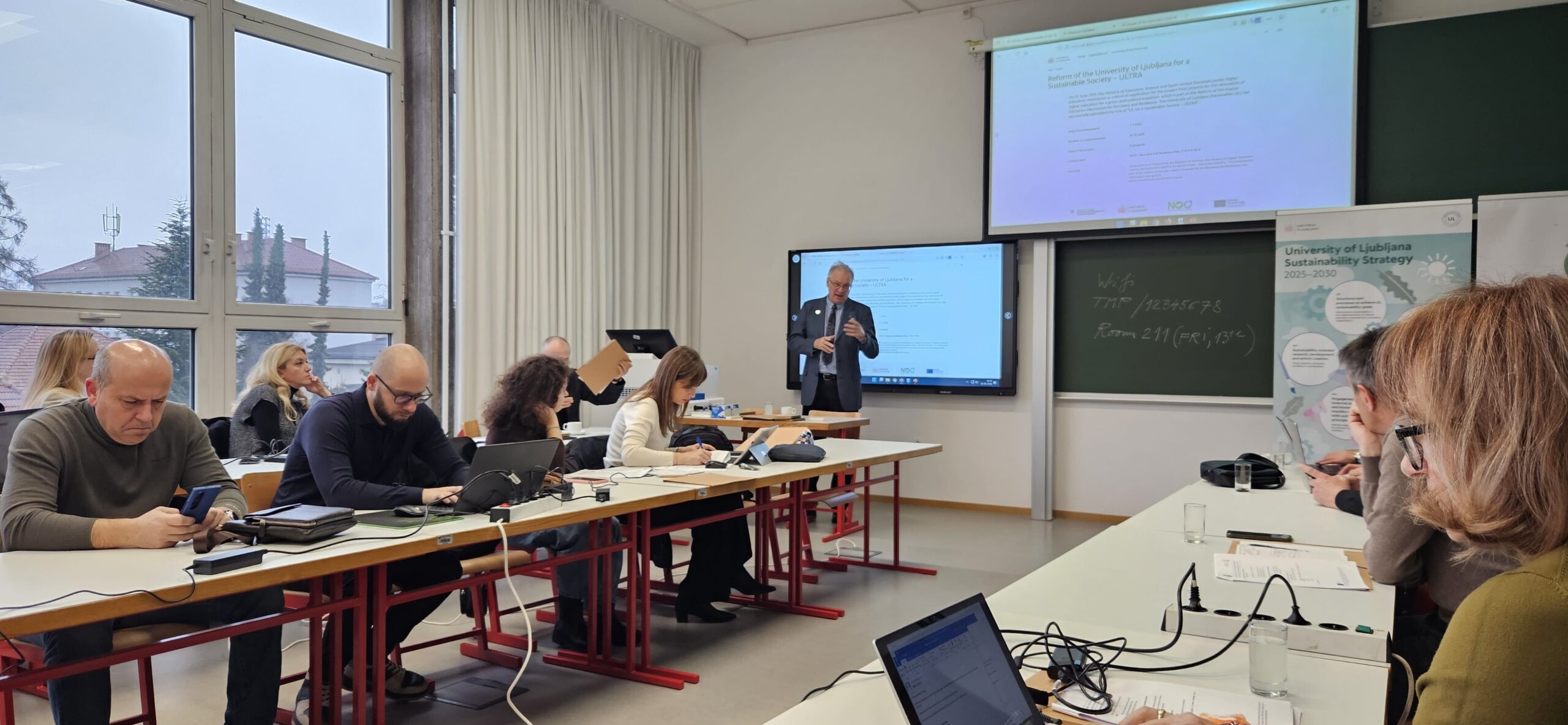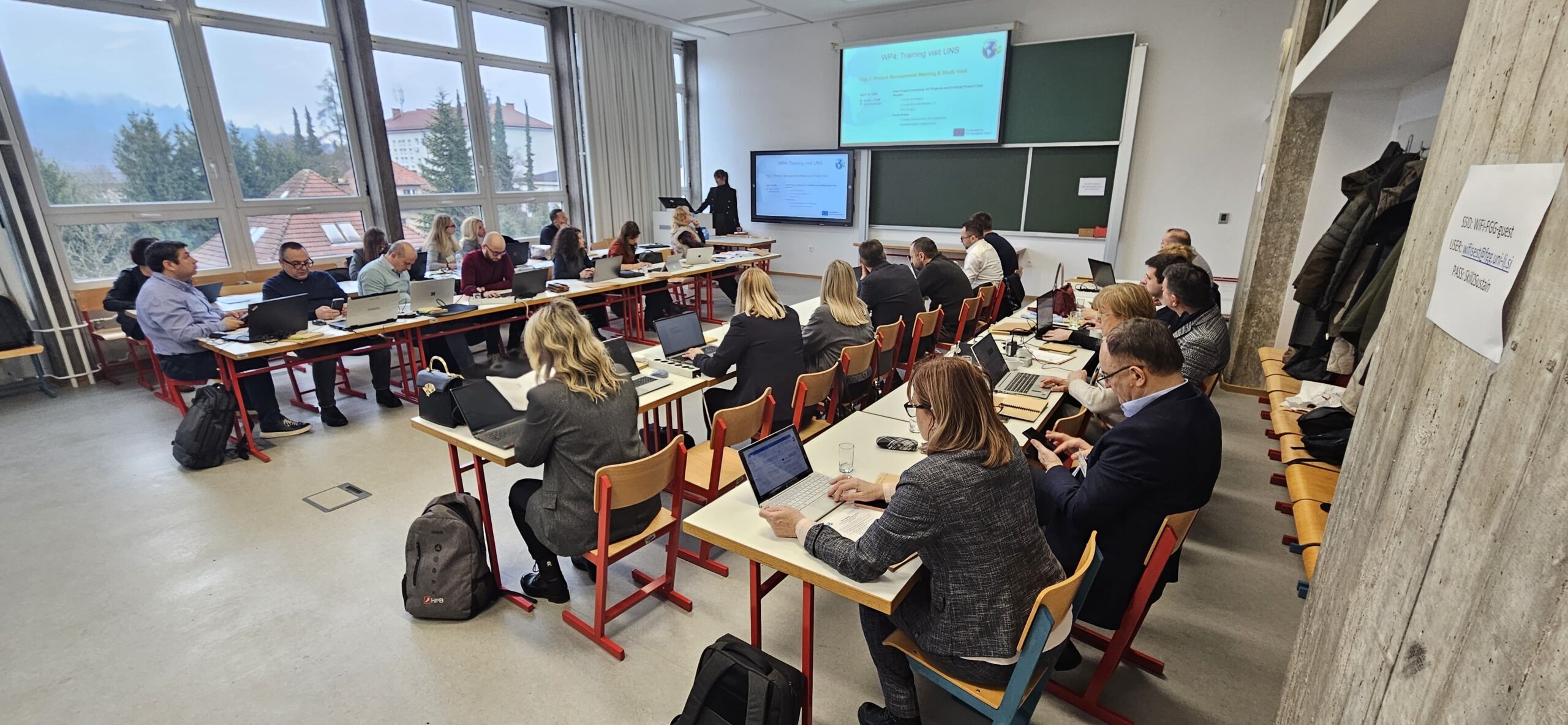
The SKILL2SUSTAIN project consortium successfully held a study visit and project management meeting at the University of Ljubljana, Faculty of Civil and Geodetic Engineering, from 10 to 13 February 2026. The four-day event brought together academic and non-academic partners to advance the implementation of digital and green transformation in higher education across the Western Balkans.
The first two days were dedicated to the SKILL2SUSTAIN Project Management Meeting, which focused on progress across key work packages. Within WP2, partners reviewed the state-of-the-art analysis of digital and green education in academia, presentedthe needs assessment findings and stakeholder requirements for green and digital skills, and discussed formulatingthe Digital and Green Initiative for WBC education in academia.
WP3 discussions focused on theprocurement, installation and activation of equipment, the establishment of Research and Education Centres (RECs), and the development of anexpanded regional network supportingacademia–stakeholder collaboration within green and digital transition. Plans for stakeholder workshops to be organised in 2026 across Montenegro, Albania and Bosnia and Herzegovina were also presented.
Within WP4, planned capacity-building activities for 2026 were presented, including the transfer of digital and green teaching practices to WBC academic staff, and curriculum accreditation processes aligned with sustainability and digitalisation objectives.
Dedicated sessions on dissemination and financial reporting strengthened the SKILL2SUSTAIN project’s governance framework and ensured alignment with quality assurance and reporting standards. In addition, a draft Memorandum of Understanding was discussed as a strategic instrument to support long-terminter-institutional cooperation beyond the project lifetime.
The study visit provided in-depth insight into best practices at the University of Ljubljana, aligned with the SKILL2SUSTAIN objectives.Participants explored how green competencies are systematically embedded in curricula, how digital transformation extends beyond software training, and how Building Information Modelling (BIM) and Geographic Information Systems (GIS) generate palpable educational values.
Hands-on sessions and laboratory visits enabled SKILL2SUSTAIN partners to connect digital and green education with practical course design, learning outcomes, assessment formats, and real-world applications. Demonstrations generated palpable educational value, including digital twins, environmental monitoring systems, geospatial technologies, BIM-based workflows, and field examples from large-scale infrastructure projects. The final day offered a structured “reality check” addressing accreditation frameworks, staff capacity, technical constraints, and student preparedness, ensuring that planned curricular innovations within SKILL2SUSTAIN remain feasible, scalable, and sustainable.