The Chamber of Engineers of Montenegro presented the SKILL2SUSTAIN project during the “Engineering Regulation” seminar in Mojkovac, highlighting digital and green transition alongside recent engineering legislation updates.
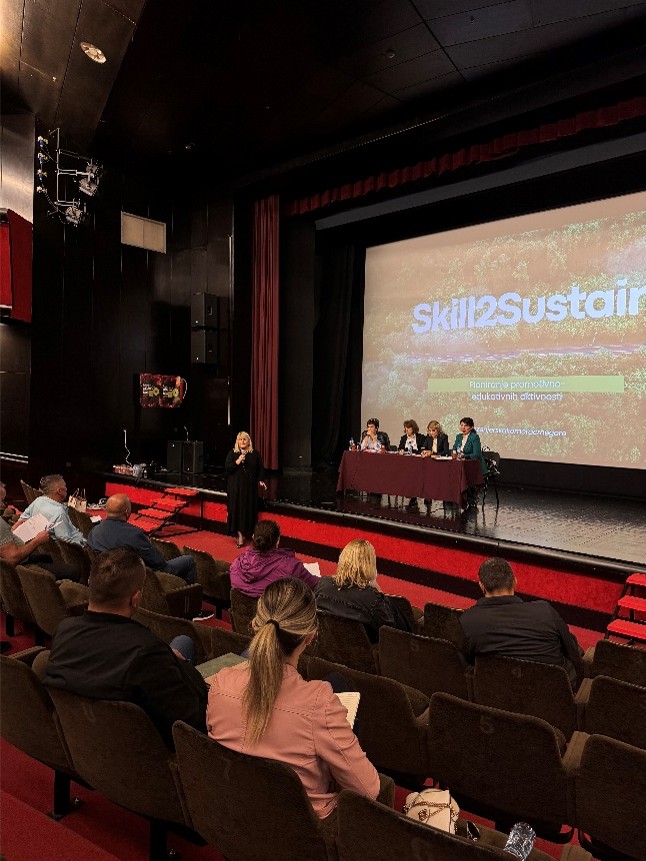
On 4 June 2026, the Chamber of Engineers of Montenegro, in cooperation with the Ministry of Spatial Planning, Urbanism and State Property, successfully organized the professional seminar “Engineering Regulation” at the Nenad Rakočević Cultural Centre in Mojkovac. The event was attended by members of the Chamber of Engineers of Montenegro and representatives of the local governments of Mojkovac and Berane, whose daily work involves the implementation of the legislation covered during the seminar.
On 4 June 2026, the Chamber of Engineers of Montenegro, in cooperation with the Ministry of Spatial Planning, Urbanism and State Property, successfully organized the professional seminar “Engineering Regulation” at the Nenad Rakočević Cultural Centre in Mojkovac. The event was attended by members of the Chamber of Engineers of Montenegro and representatives of the local governments of Mojkovac and Berane, whose daily work involves the implementation of the legislation covered during the seminar.
The seminar focused on presenting the latest legislative and regulatory developments in the fields of spatial planning, construction, technical documentation, design review, and professional supervision. Participants had the opportunity to exchange experiences, discuss practical challenges, and receive answers to their questions from experts representing the Ministry.
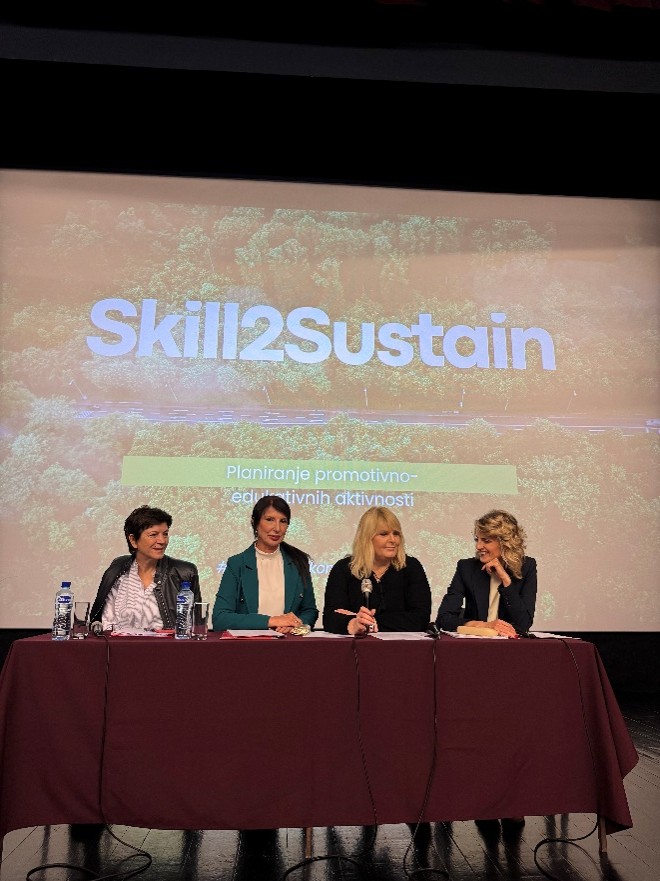
The lecturers included Marina Izgarević Pavićević (State Secretary, Directorate for Spatial Planning), Milica Abramović (Head of the Directorate for Construction Permits), Borka Novković, and Nataša Martinović (Senior Advisors at the Directorate for Construction Permits).
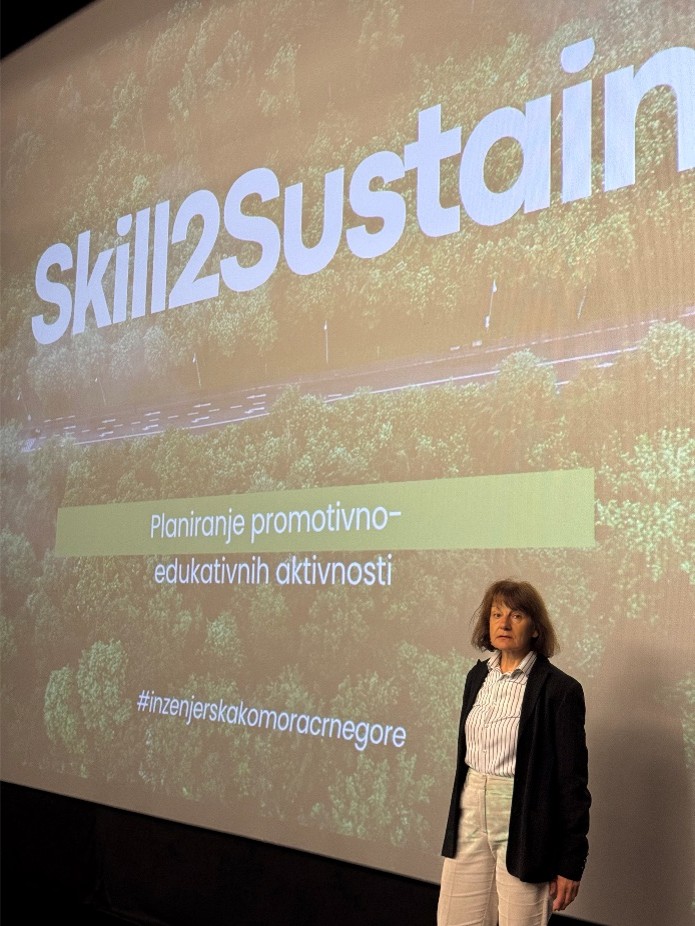
During the event, the SKILL2SUSTAIN project was presented to participants. As a project partner, the Chamber of Engineers of Montenegro introduced the project’s objectives, emphasizing the development of a modern and sustainable educational ecosystem that supports digitalization and the green transition through innovative study programmes, lifelong learning opportunities, and stronger cooperation between higher education institutions and relevant stakeholders.